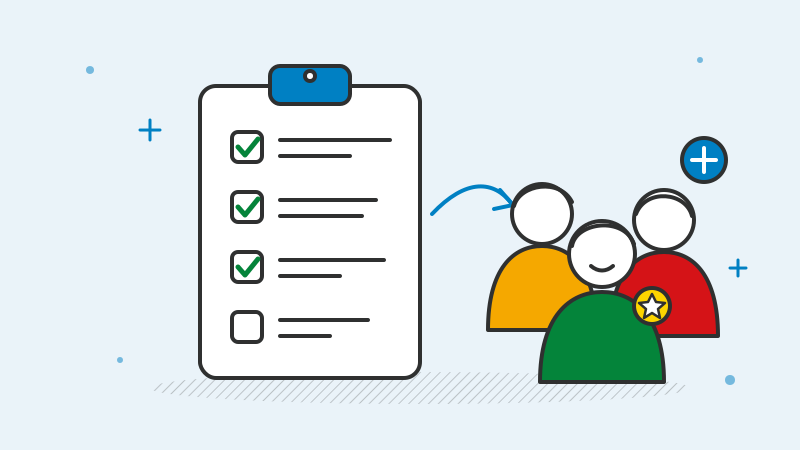

Most software vendors will offer you one of two pricing models: a fixed price for an agreed scope, or time and materials, where you pay for the hours the team actually works. Neither is better in general. Each one moves risk to a different place, and the right choice depends on how well you can describe what you want today.
This guide explains how each model works in practice, where it tends to go wrong, and how to pick the one that suits your project.
How fixed price works
With a fixed-price contract, the vendor estimates the work for a defined scope and commits to delivering it for an agreed amount. Payment is usually tied to milestones, such as signed-off designs, a working beta and launch.
The appeal is obvious. You know the cost before you start, which makes budgeting and internal approval much easier. The vendor carries the risk of the work taking longer than they estimated.
That risk has a price, though. A careful vendor will add contingency to the estimate, because they are the ones who absorb any overrun. And the scope has to be written down in enough detail that both sides agree on what “done” means. Anything outside that description is a change, and changes are estimated and charged separately.
How time and materials works
With time and materials, you pay for the time the team spends, usually billed monthly against agreed rates for each role. You can change priorities as you go, add features, drop others, and react to what you learn from users.
The flexibility is real, but so is the trade-off. You carry the risk of the work taking longer than expected. The final cost is not known in advance, so you need a way to keep spending under control: a monthly budget cap, regular reporting, and a backlog that someone on your side actively prioritises.
A dedicated team arrangement is a close cousin of time and materials. You pay for full-time people assigned to you, and you direct what they work on.
Where fixed price fits best
Fixed price works well when:
- The scope is small to medium and can be described clearly
- You are rebuilding something that already exists, so the behaviour is known
- Requirements are unlikely to change much during the build
- You need a firm number for a board, investor or procurement process
- You do not have someone in-house who can manage a backlog week to week
A good example is a well-understood internal tool, or a marketing site with a defined set of integrations. Both sides can see the finish line.
Where time and materials fits best
Time and materials works well when:
- You are building a new product and expect to learn from early users
- The project is long-running, with no clear end date
- Requirements depend on things you cannot know yet, such as a third-party API you have not tested
- You have a product owner who can make decisions quickly
- You want to keep adding to the product after launch
Most early-stage products fall into this group. If you are still deciding what to build first, our post on MVP development covers how to narrow the scope.
The risks people underestimate
Fixed price can encourage the wrong behaviour. If the vendor is losing money on a project, there is pressure to do the minimum that meets the written specification. You may get exactly what you asked for rather than what you needed. The fix is a detailed scope, regular demos and a working relationship where problems are raised early.
Change requests add up. A fixed price is only fixed for the scope it covers. If you discover halfway through that you need a different payment provider or a new user role, that is extra cost. Projects with a lot of changes can end up costing more than they would have on time and materials.
Time and materials needs active management. Without clear priorities, a team can spend weeks polishing features that do not matter. You need someone who reviews progress, says no to low-value work and watches the budget.
Estimates are still estimates. Even on time and materials, ask for an estimate range for the work you know about. It gives you a baseline to track against and makes surprises visible early.
Hybrid approaches that work
You do not have to choose one model for the whole project. Common combinations include:
- Paid discovery, then fixed price. A short discovery phase on time and materials produces a detailed scope, which the vendor then prices as a fixed project. You get a firmer number because the unknowns have been explored first.
- Fixed price per milestone. The project is split into phases, each priced separately. You can adjust the scope of later phases based on what you learn in earlier ones.
- Fixed build, then time and materials. The first version is delivered at a fixed price, and ongoing improvements and support move to time and materials or a dedicated team.
For many clients, paid discovery followed by milestone-based pricing gives a good balance of cost certainty and flexibility.
Questions to ask before you sign
Whichever model you choose, ask the vendor:
- How did you arrive at this estimate, and what assumptions does it rely on?
- What is explicitly out of scope?
- How are changes requested, estimated and approved?
- How often will we see working software?
- What happens if the project runs over, on either model?
- Who owns the source code, and when is it handed over?
The answers tell you a lot about how the vendor handles uncertainty. A vendor who cannot explain their assumptions is guessing.
The quality of your brief also has a direct effect on the quality of the estimates you receive. If you have not written one yet, see how to write a software project brief.
How we approach it at Dotqode
We offer both. For an end-to-end project, we start with discovery, break the scope into features, estimate each one and agree on milestones. Changes to scope are estimated separately before any work on them begins, and you see a demo at the end of every sprint. If you would rather direct the work yourself, a dedicated team works on your backlog in your tools. In both cases, you own all source code and intellectual property.
Not sure which model suits your project?
Tell us what you are planning and we will give you an honest view of which pricing model fits. Get in touch to arrange a call.